Meet the Mountain: Wildlife & Nature Around Banff National Park’s SkiBig3 Resorts
A SkiBig3 trip is about more than great skiing. You're spending the day in the heart of Banff National Park, where incredible terrain, mountain views, and wildlife all come together.
Every resort offers a different experience, but one thing they all have in common is the chance to connect with nature. Whether you're cruising a groomer at Lake Louise, skiing above the treeline at Banff Sunshine, or taking in the views from Mt. Norquay, you're surrounded by one of the most beautiful landscapes in the Canadian Rockies.
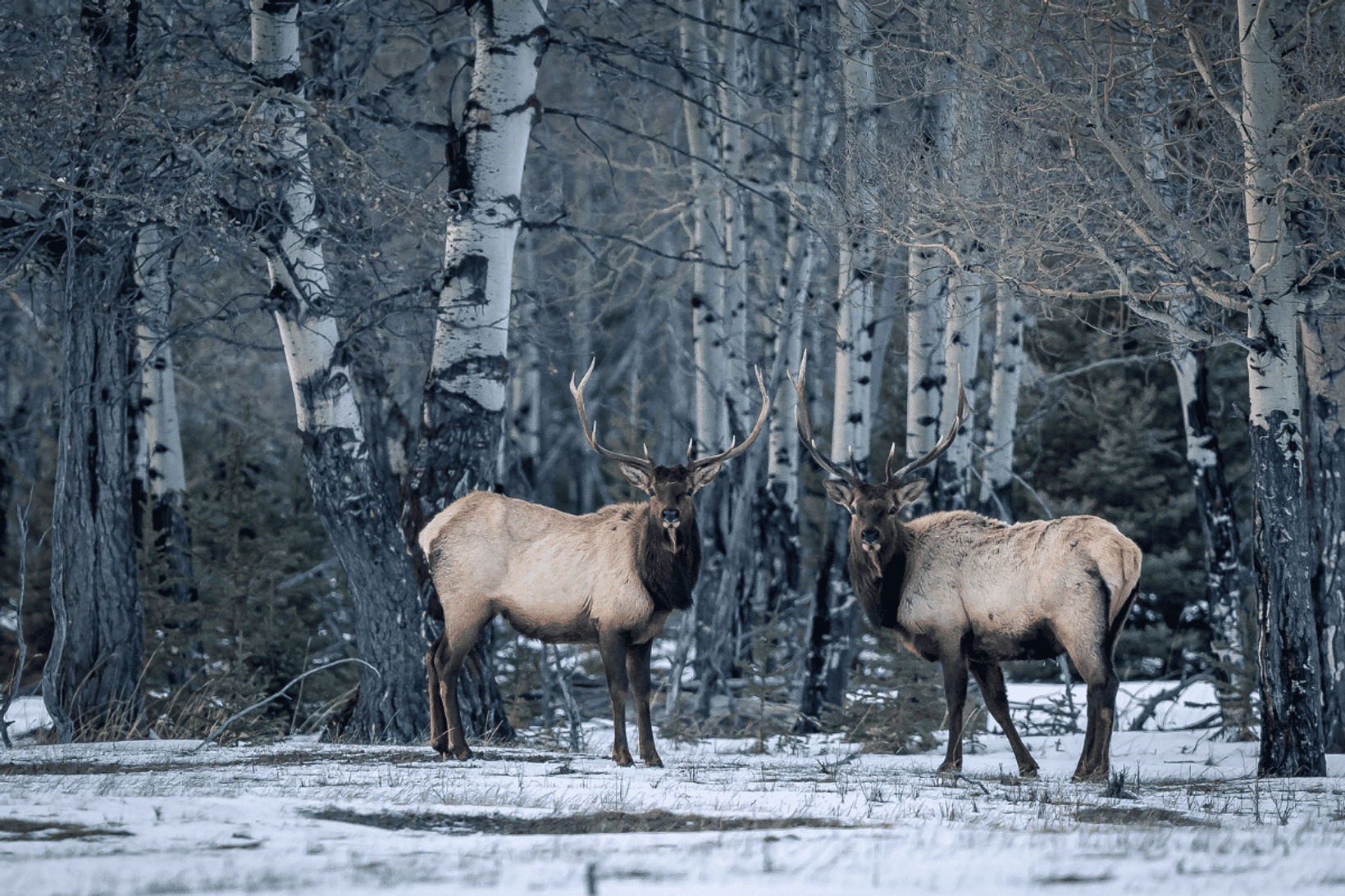
Elk at Mt Norquay in Banff National Park | Photo credit: Jill Scarpato
Keep your eyes open
Part of the fun is never knowing what you'll see.
Elk are common around the Banff townsite and on the drive to all three resorts, especially in winter. If you're heading up to Mt. Norquay, keep an eye on the rocky slopes for bighorn sheep. Around the lodges, you might spot a Canadian jay or Whiskeyjack stopping by to see what's going on.
Beyond the wildlife you're most likely to spot, Banff National Park is also home to black bears, grizzly bears, cougars, wolves, coyotes, moose, mountain goats, lynx, and over 260 species of birds. While many of these animals are rarely seen, especially during the winter months, knowing they share the landscape is part of what makes skiing here so unique. Every run at SkiBig3 takes place in a living national park, where protecting wildlife and their habitat is just as important as preserving the incredible mountain experience.
Not every wildlife moment is a big one. Sometimes it's fresh tracks in the snow, a raven soaring overhead, or simply taking a minute to appreciate the quiet between runs.
Bighorn Sheep on the way to Mt Norquay | Photo Credit: Jill Scarpato
Help keep Banff wild
Wildlife sightings are memorable because these animals are exactly where they're meant to be.
If you're lucky enough to see one, give it plenty of space, never feed it, and always respect its habitat.
During certain times of year, areas may see closures to keep both you and wildlife safe. The Parks Canada website has plenty of information on wildlife safety and how you can do your part to help preserve the ecology of the park. By following a few simple guidelines, we can all help protect the place that makes skiing here so special.
Protecting wildlife in Banff National Park is very important | Photo credit
Protecting Wildlife in Banff National Park
One of the things that makes a SkiBig3 trip so unique is that you're skiing in the heart of Banff National Park, where protecting wildlife is part of everyday life.
At Lake Louise Ski Resort, the resort overlaps with the Whitehorn Wildlife Corridor, an ecologically sensitive area that provides an important travel route for local grizzly bears and other wildlife. The resort works closely with Parks Canada to help protect this habitat through seasonal closures, wildlife monitoring, and careful management, allowing recreation and conservation to exist side by side.
As you travel between the three resorts, you'll also notice wildlife overpasses and underpasses along the Trans-Canada Highway. These specially designed crossings allow animals to safely move between habitats, reducing wildlife-vehicle collisions while preserving natural migration routes.
With 38 wildlife underpasses and six overpasses, Banff National Park is home to the largest wildlife crossing network in the world.
These crossings help species like elk, deer, bears, wolves, and other wildlife safely navigate the landscape while visitors explore the park.
It's just one more reason a SkiBig3 vacation is different. Here, incredible skiing and wildlife conservation go hand in hand, creating an experience that's as memorable off the slopes as it is on them. At SkiBig3, every day on the mountain is about more than the turns you make. It's about experiencing Banff National Park in a way that's only possible when you ski, explore, and slow down long enough to take it all in.


